Insights
How to Use Hydroquinone Cream Safely: What You Should Know
Hydroquinone can help treat hyperpigmentation, but using it incorrectly or for too long can cause irritation and other complications. Learn how to use hydroquinone cream safely, when darker pigmentation may be a warning sign, how to store your cream, and why pregnancy precautions, sunscreen and a long-term maintenance plan matter.
Read MoreDifficulty Swallowing? Can I Crush My Tablets or Open My Capsules?
Have difficulty swallowing tablets or capsules? Learn why some medications can be crushed or opened while others cannot, how extended-release and enteric-coated formulations work, and when a customized liquid formulation may be an appropriate alternative.
Read MoreTopical Minoxidil and Finasteride: What Does the Clinical Evidence Show?
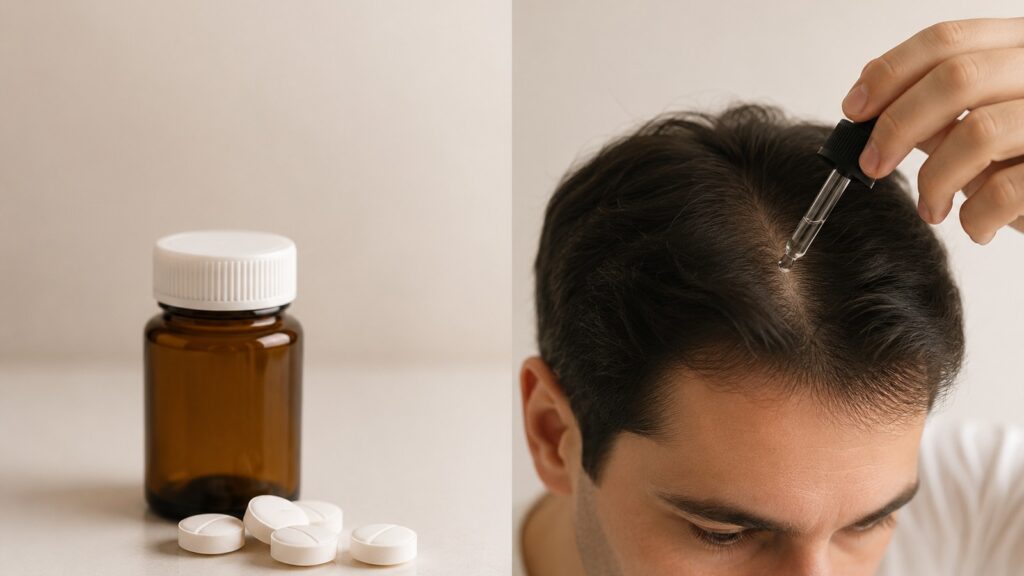
Can topical minoxidil and finasteride work better together for male pattern hair loss? Explore the clinical evidence behind combination therapy, how minoxidil and finasteride target hair loss through different pathways, and why concentrations, safety, systemic absorption, and individual treatment response still matter when considering a topical combination.
Read MoreBeyond Hydroquinone: 3 Emerging Ingredients Dermatologists Are Watching for Hyperpigmentation
Discover three emerging ingredients for hyperpigmentation: glutathione, cysteamine, and isobutylamido thiazolyl resorcinol. Learn how they work, what clinical studies show, and why practical considerations such as oxidation, odor, irritation, formulation stability, and skin tolerability matter when choosing pigmentation care.
Read MoreTopical vs Oral vs Sublingual Minoxidil: Which Option Is Right for Your Hair Loss?
Should you choose topical, oral, or sublingual minoxidil for hair loss? Learn how each option works, compare their effectiveness and side effects, and discover why an enzyme called SULT1A1 may explain why topical minoxidil works well for some people but not for others.
Read MoreTopical Finasteride vs Oral Finasteride: Which Hair Loss Treatment Is Right for You?
Wondering whether topical or oral finasteride is the better option for hair loss? Learn how they work, compare their benefits and side effects, and discover how personalized topical formulations may help support hair growth.
Read MoreEstriol Face Cream: Clinical Evidence and Compounded Options
Can topical estriol improve wrinkles, skin hydration, and elasticity? Explore what clinical studies say about topical estriol for skin health, how it compares with traditional anti-aging ingredients, and who may benefit from this evidence-based approach to supporting mature skin during and after menopause.
Read MoreWhy Does Your Skin Age Faster After Menopause? The Role of Estrogen Explained
Discover how declining estrogen levels affect collagen, skin hydration, elasticity, and wrinkles during menopause. Learn what clinical research says about estrogen and skin aging, the role of topical estriol in skin health, and why understanding hormonal changes is the first step toward evidence-based skincare for mature skin.
Read MoreTop 5 Common Anti-Hyperpigmentation Ingredients
Not all skin-brightening ingredients work the same way. This evidence-based guide explores the five most effective ingredients for hyperpigmentation, including their clinical benefits, recommended strengths, safety for long-term use, and how choosing the right formulation for your skin type can improve treatment success.
Read MoreWhy Personalized Skincare Matters: Raghav’s Story
Dark spots and pigmentation can have many different causes, which is why one skincare routine doesn’t work for everyone. Learn why personalized skincare matters for hyperpigmentation and read one patient’s experience of receiving evidence-based, pharmacist-guided skincare advice.
Read More