
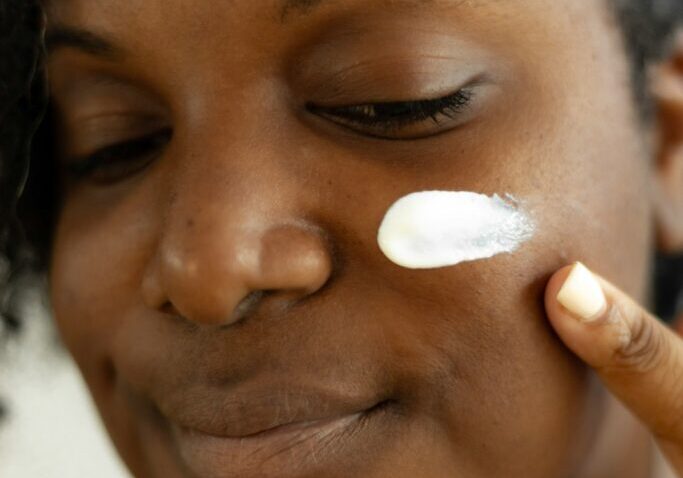
“My hydroquinone cream used to work really well. Why isn’t it working anymore?”
“I’ve been using it for almost a year, but now some of my dark spots actually look darker.”
“Should I use more—or ask for a stronger hydroquinone cream?”
These are questions we sometimes hear from patients who have been using prescription hydroquinone for hyperpigmentation or melasma.
Hydroquinone can be an effective treatment for hyperpigmentation, but more is not always better, and longer is not necessarily better. If pigmentation starts getting darker despite continued treatment, simply increasing the strength or applying more cream may not address the underlying problem.
Understanding how to use hydroquinone properly—and when to stop and speak with your healthcare provider—is an important part of using it safely.
What Does Hydroquinone Do?
Hydroquinone helps reduce excess pigmentation primarily by inhibiting tyrosinase, a key enzyme involved in melanin production. More specifically, hydroquinone interferes with the conversion of DOPA to melanin through its interaction with copper at the tyrosinase enzyme. It has also been reported to affect melanosomes and melanocytes.
This is why hydroquinone has been one of the most extensively studied topical ingredients for conditions such as melasma and other forms of hyperpigmentation and may be prescribed alone or as part of a combination treatment.
One well-known approach combines:
Hydroquinone + tretinoin (retinoic acid) + a topical corticosteroid
This type of combination is often referred to as a Kligman’s or triple-combination formula and has been widely used in the treatment of melasma.
Each ingredient has a different purpose—but combining active ingredients also means that the cream needs to be used with caution under the guidance of a clinician.
Start Slowly: Irritation Can Make Pigmentation Worse
Tretinoin is commonly included in prescription hydroquinone combinations, but it can cause dryness, peeling, redness, stinging and irritation, particularly when treatment is first started.
Some mild irritation can occur as the skin adjusts. However, severe burning, significant redness, swelling, crusting or persistent irritation should not simply be ignored.
Why?
Inflammation itself can stimulate pigmentation, particularly in people who are prone to post-inflammatory hyperpigmentation (PIH), especially in skin of color individuals.
In other words, aggressively treating pigmentation while continually irritating the skin can become counterproductive.
If your skin becomes significantly irritated or feels like it is burning, stop applying the product and contact your prescriber or pharmacist for advice. Depending on the situation, the frequency, concentration, other skincare products or treatment plan may need to be adjusted.
Hydroquinone Is Generally Not Intended for Indefinite Continuous Use
Hydroquinone should be used according to the treatment duration recommended by your prescriber.
Long-term or excessive use can increase the risk of adverse effects, including:
- irritation, redness and dryness;
- contact dermatitis;
- uneven changes in pigmentation; and
- exogenous ochronosis with characteristic gray-blue or blue-black discoloration although this condition is uncommon
Rather than continuously using hydroquinone indefinitely, your healthcare provider may recommend a defined treatment course followed by reassessment or a maintenance strategy using other pigmentation-control ingredients.
What About Longer-Term or Intermittent Use?
Does this mean hydroquinone can never be used for longer than a few months?
Not necessarily.
There is an important difference between continuous, unsupervised long-term use and longer-term treatment that is periodically reassessed and used under the guidance of a healthcare professional.
Clinical studies have evaluated longer-term treatment of melasma with a triple-combination cream containing hydroquinone 4%, tretinoin 0.05%, and fluocinolone acetonide 0.01%. A published review summarized safety and efficacy data from more than 2,000 patients, including some who were treated for longer than 12 months. In the long-term studies, approximately 81–94% of patients were rated clear or mild at month 12, and reported adverse events were predominantly mild and localized to the application site.
Importantly, longer-term melasma treatment does not necessarily mean applying hydroquinone continuously every day for years.
Melasma is a chronic and recurrent condition, so some treatment strategies use the triple-combination cream intermittently or as needed after the initial pigmentation has improved. The goal is to maintain improvement while minimizing unnecessary exposure and monitoring for irritation or other adverse effects.
So, Is Long-Term Hydroquinone Safe?
The answer isn’t simply yes or no.
The available clinical evidence suggests that appropriately selected hydroquinone-containing combination therapy can be used beyond a short initial treatment course in some patients under medical supervision. However, this should not be interpreted to mean that unrestricted, continuous hydroquinone use is risk-free.
For patients who need longer-term pigmentation control, a healthcare provider may recommend intermittent hydroquinone treatment, reduced application frequency, treatment breaks, or transition to non-hydroquinone ingredients for maintenance, depending on the individual.
The key is not necessarily to avoid hydroquinone after a specific number of months, but to avoid using it indefinitely without reassessment.
How Should Hydroquinone Cream Be Stored?
Storage matters—especially with compounded formulations containing more than one active ingredient.
Hydroquinone is susceptible to oxidation, while tretinoin is particularly sensitive to light. Research has demonstrated photodegradation of tretinoin in dermatological cream preparations, including degradation from UVA and visible-light exposure.
Keep your medication away from direct sunlight, excessive heat and moisture, in its original container, and according to the storage instructions on the pharmacy label.
What If My Hydroquinone Cream Changes Colour?
Hydroquinone can oxidize over time, which may cause a preparation to progressively darken.
A slight change doesn’t automatically tell you how much active ingredient remains, but a significant change in colour, texture or odour is a good reason to stop and ask your pharmacist to assess the preparation rather than continuing to use it indefinitely.
This is also why proper packaging for example airless pump, storage and an appropriate beyond-use date matter for compounded hydroquinone formulations.
Can Hydroquinone Be Used During Pregnancy?
Hydroquinone is generally avoided during pregnancy because a relatively substantial amount can be systemically absorbed through the skin and pregnancy safety data are limited.
If the formulation also contains tretinoin, that provides an additional reason to avoid the product during pregnancy. Although systemic exposure from topical tretinoin is much lower than with oral retinoids, topical retinoids are generally avoided during pregnancy as a precaution.
If you are pregnant, planning a pregnancy or become pregnant while using a compounded pigmentation cream, speak with your prescriber or pharmacist about your treatment.
Don’t Forget Sunscreen
Treating pigmentation without addressing sun exposure is an uphill battle.
UV exposure can stimulate melanin production and contribute to the recurrence or worsening of melasma and other forms of hyperpigmentation. Sun exposure has also been identified as an important consideration in reported cases of hydroquinone-associated ochronosis.
Use a broad-spectrum sunscreen every morning and reapply when appropriate.
For melasma in particular, your healthcare provider may also recommend a tinted sunscreen containing iron oxides, since visible light can contribute to pigmentation in susceptible individuals.
The Practical Takeaway
Hydroquinone can be a valuable treatment for hyperpigmentation when it is used appropriately, but it isn’t a cream that should simply be applied continuously for years without reassessment.
Remember:
Start carefully. If your formulation contains tretinoin, irritation can be particularly noticeable at the beginning.
Don’t push through severe burning or inflammation. Irritated skin can develop additional post-inflammatory pigmentation.
Don’t assume darker pigmentation means you need stronger hydroquinone. If treatment used to work and your skin is now becoming progressively darker, have it reassessed.
Use hydroquinone for the duration recommended by your healthcare provider. Prolonged, inappropriate use can increase the risk of complications such as exogenous ochronosis.
Store your cream properly. Follow the pharmacy’s instructions for your specific compounded formulation.
Avoid hydroquinone-containing treatments during pregnancy unless specifically directed otherwise by an appropriate healthcare professional.
And perhaps most importantly, have a maintenance plan. Hyperpigmentation—especially melasma—often requires long-term management even when hydroquinone itself is being used for a limited treatment period.
If you have questions about how to use your compounded hydroquinone formulation, how long to use it, or what to do when your pigmentation returns, speak with your prescriber or one of our compounding pharmacists at Atria.
References
- González-Molina V, Martí-Pineda A, González N. Topical Treatments for Melasma and Their Mechanism of Action. J Clin Aesthet Dermatol. 2022;15(5):19–28. https://jcadonline.com/topical-treatments-melasma-mechanism-of-action/
- Ishack S, Lipner SR. Exogenous ochronosis associated with hydroquinone: a systematic review. International Journal of Dermatology. 2022;61(6):675–684. https://pubmed.ncbi.nlm.nih.gov/34486734/
- Simmons BJ, Griffith RD, Bray FN, et al. Exogenous ochronosis: a comprehensive review of the diagnosis, epidemiology, causes, and treatments. American Journal of Clinical Dermatology. 2015;16(3):205–212. https://pubmed.ncbi.nlm.nih.gov/25837718/
- Torok HM. A comprehensive review of the long-term and short-term treatment of melasma with a triple combination cream. Am J Clin Dermatol. 2006;7(4):223–230. https://pubmed.ncbi.nlm.nih.gov/16901182/