
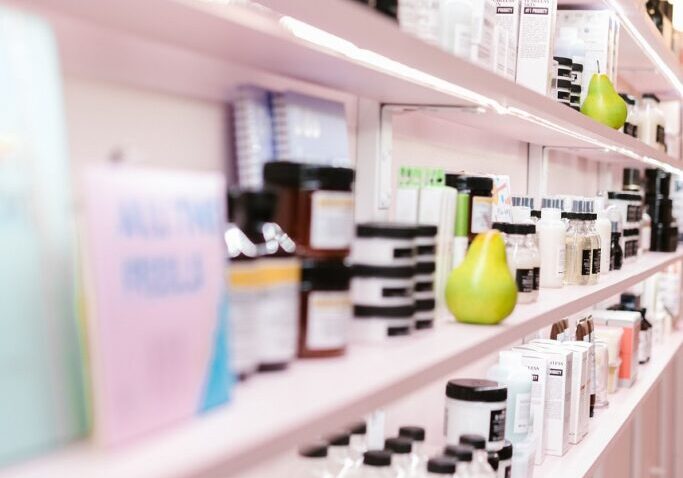
Walk into a skincare aisle and you’ll see countless products promising clearer skin.
Salicylic acid. Benzoyl peroxide. Niacinamide. Azelaic acid.
Then you visit a doctor or dermatologist and suddenly you’re hearing other names:
Tretinoin. Tazarotene. Clindamycin. Dapsone.
What’s the difference and is there one that work better than the other?
The answer becomes easier once you understand one thing:
Not every acne ingredient does the same job.
Acne involves several processes, including clogged follicles, excess sebum, Cutibacterium acnes (C. acnes) and inflammation. Modern acne guidelines therefore recommend combining treatments with different mechanisms of action when appropriate rather than expecting one ingredient to solve everything.
Let’s start with the treatments you can commonly find without a prescription.
Non-Prescription Acne Ingredients
Salicylic Acid: The Pore Unclogger
Think: blackheads + whiteheads + oily, congested skin
Salicylic acid is a beta-hydroxy acid (BHA) that helps loosen and remove dead skin cells that contribute to clogged pores.
Because salicylic acid is oil-soluble, it’s particularly useful in oily and acne-prone skin which explains why you’ll find it in so many acne cleansers, toners and leave-on treatments.
But more exfoliation isn’t necessarily better.
Using a salicylic acid cleanser, exfoliating toner and acid serum while introducing prescription acne treatment can quickly become irritating.
The goal is to unclog your pores without over-exfoliating or irritating your skin.
Benzoyl Peroxide: The C. acnes Fighter
Think: red + inflammatory pimples
Benzoyl peroxide works differently.
It has antimicrobial activity against C. acnes and can be particularly useful for inflammatory acne.
But here’s an important distinction:
Benzoyl peroxide is not an antibiotic.
That becomes important when we get to prescription antibiotics because benzoyl peroxide is commonly paired with them to help limit the development of antibiotic resistance.
One practical warning? Keep it away from your favorite towels and pillowcases. Benzoyl peroxide can bleach fabrics.
Another important point is how you pair it with retinoids. Benzoyl peroxide should not automatically be layered with every retinoid product. Traditional tretinoin formulations can be susceptible to oxidation when used together with benzoyl peroxide, and using both at the same time may also increase dryness and irritation. Depending on the specific products, your healthcare provider may recommend using benzoyl peroxide in the morning and tretinoin in the evening instead.
However, this doesn’t apply to every retinoid. Adapalene is more stable in the presence of benzoyl peroxide, and the two ingredients are commonly formulated together in prescription acne treatments.
Azelaic Acid: The Multitasker
Think: acne + inflammation + post-acne dark marks
Azelaic acid is interesting because it doesn’t target just one pathway.
It has comedolytic, antimicrobial and anti-inflammatory effects and can also interfere with abnormal pigmentation.
That makes it particularly interesting for someone who says:
“The pimple disappeared in a week, but the dark mark stayed for six months.”
For acne-prone patients who are also concerned about post-inflammatory hyperpigmentation, treatment isn’t always just about preventing the next pimple. We may also need to think about what the previous pimple left behind.
What About Niacinamide?
Niacinamide is everywhere in skincare—and it can certainly be useful.
It can support the skin barrier and has anti-inflammatory properties, making it a useful supporting ingredient in an acne-prone skincare routine.
But I wouldn’t put niacinamide in the same category as prescription tretinoin or benzoyl peroxide and tell someone that they’re interchangeable acne treatments.
Think of it more as supporting the environment around acne treatment rather than replacing proven acne medication when medication is needed.
Prescription Acne Ingredients
This is where acne treatment becomes more interesting.
If non-prescription skincare isn’t controlling your acne—or your acne is moderate, inflammatory, persistent or beginning to scar—a healthcare provider may consider prescription treatment.
Tretinoin: More Than an Anti-Aging Ingredient
Think: clogged pores + preventing new acne + inflammation
Most people on social media associate tretinoin with anti-aging but tretinoin has been used as an acne medication for decades.
Tretinoin is a prescription topical retinoid that helps normalize cell turnover within the follicle, reducing the formation of microcomedones—the tiny clogged follicles that eventually become visible acne lesions.
That’s why tretinoin isn’t really a “put it on the pimple and make it disappear tonight” medication.
It is much more about preventing the acne process from developing in the first place.
The downside?
Tretinoin can cause dryness, peeling, redness and irritation, particularly when first introduced.
This is one reason starting concentration, formulation base, frequency and the rest of the skincare routine can matter so much.
Tazarotene: Another Prescription Retinoid
Think: comedonal + inflammatory acne
Tazarotene belongs to the same broad retinoid family as tretinoin, but it is a different molecule.
Like other topical retinoids, it helps normalize follicular keratinization and has anti-inflammatory activity.
Tazarotene products have been approved in Canada for acne; for example, Health Canada identifies Arazlo (tazarotene) for acne vulgaris in patients 10 years of age and older, with specific pediatric-use instructions.
Tazarotene can also be irritating, so the strongest treatment on paper isn’t automatically the best treatment for every person’s skin.
The treatment you can use consistently often matters more than the treatment you can tolerate for three days.
Clindamycin: The Antibiotic
Think: inflammatory acne
Topical clindamycin is an antibiotic that targets C. acnes and reduces inflammation.
But unlike benzoyl peroxide, clindamycin is an antibiotic, so bacterial resistance matters.
That’s why modern acne management generally avoids using topical antibiotics as indefinite stand-alone treatment. They are commonly combined with benzoyl peroxide.
In Canada, prescription acne products containing clindamycin + benzoyl peroxide are marketed, as are prescription combinations containing clindamycin + tretinoin.
This is a perfect example of combination therapy targeting different mechanisms:
Clindamycin → antimicrobial + anti-inflammatory
Benzoyl peroxide → antimicrobial without antibiotic resistance
or
Clindamycin → inflammatory/bacterial component
Tretinoin → clogged follicles + microcomedone formation
Instead of simply increasing the concentration of a single ingredient, we’re combining ingredients that have different jobs.
Dapsone: An Anti-Inflammatory Option
Think: inflammatory acne
Topical dapsone is another prescription medication used for acne, particularly inflammatory lesions.
Its acne activity appears to involve anti-inflammatory effects, although its exact mechanisms in acne are more complex than simply killing bacteria.
Dapsone can therefore provide another treatment pathway for selected patients particularly when a healthcare provider is designing a regimen around inflammatory acne and individual tolerability.
One interesting practical consideration: topical dapsone and benzoyl peroxide used together can temporarily cause yellow-orange skin discoloration, so the timing of products can matter.
Prescription Doesn’t Automatically Mean “Better”
This distinction is important for younger readers.
A prescription medication isn’t automatically better than an over-the-counter ingredient.
And an over-the-counter ingredient isn’t automatically weaker or safer.
They simply have different roles.
Someone with mild clogged pores may do very well with a simple regimen involving salicylic acid or benzoyl peroxide.
Someone with persistent comedonal and inflammatory acne may need a prescription retinoid.
Someone with inflammatory acne might benefit from combination therapy.
And someone developing comedonal should probably not spend another six months experimenting with social media skincare routines before seeking medical assessment.
The severity and type of acne matter.
Why Combining the Right Ingredients Can Work Better
This brings us back to the most important idea in acne treatment:
Don’t count ingredients percentage. Count mechanisms.
Imagine someone has:
clogged pores + inflammatory pimples + post-acne pigmentation.
One ingredient may not address all three equally well.
A healthcare provider might therefore build a regimen where one treatment targets comedone formation, another targets C. acnes and inflammation, while the overall skincare routine protects the skin barrier and addresses pigmentation.
That’s very different from randomly layering:
salicylic acid + glycolic acid + benzoyl peroxide + retinol + an exfoliating toner + a scrub.
Combination therapy is strategic. Ingredient overload isn’t.
What If Standard Acne Products Are Too Irritating?
Two patients can have similar acne but completely different skin tolerance.
One person may tolerate a standard prescription retinoid easily.
Another may experience significant dryness and irritation.
Someone else may have acne together with sensitive skin, rosacea, eczema or significant post-inflammatory hyperpigmentation.
Depending on the prescription and clinical situation, compounded dermatology formulations can allow certain concentrations, ingredient combinations and formulation bases to be individualized.
At Atria Compounding Pharmacy, the goal isn’t to put every possible acne ingredient into one cream.
The better questions are:
What type of acne are we treating?
Which ingredients work together?
And what can this person’s skin actually tolerate?
Because the best acne routine isn’t necessarily the longest one.
It’s the one that targets the right problems while being simple enough to use consistently.
References
- Reynolds RV, Yeung H, Cheng CE, et al. Guidelines of care for the management of acne vulgaris. Journal of the American Academy of Dermatology. 2024;90(5):1006.e1–1006.e30. https://www.jaad.org/article/S0190-9622(23)03389-3/fulltext
- American Academy of Dermatology. Acne: Diagnosis and treatment.
- Leung AKC, Barankin B, Lam JM, Leong KF, Hon KL. Update to acne vulgaris treatment for Canadian practice. 2025. doi.org/10.46747/cfp.710708455
- Leyden JJ, Del Rosso JQ, Webster GF. Clinical considerations in the treatment of acne vulgaris and other inflammatory skin disorders. Review of non-antibiotic acne therapies and mechanisms. https://link.springer.com/article/10.1007/s13555-016-0138-1